
A Beginner's Guide to Morse Code and Telegraphs
The invention of the telegraph and the subsequent development of Morse code laid the literal groundwork for the public internet we use today.
Jun 2, 2026
SHARE
Automate the telecom lifecycle
Get better quotes, launch sites faster, keep inventory accurate, and control spend.
Before the digital age and the instant gratification of modern smartphones, the world relied on a rhythmic series of clicks and buzzes to communicate across vast distances. The invention of the telegraph and the subsequent development of Morse code marked the first time in human history that information could travel faster than a horse. This revolution in telecommunications reshaped global politics, warfare, and commerce, laying the literal groundwork for the internet we use today.
The Origins of Long-Distance Communication
The quest to send messages over long distances has existed for centuries, originally relying on visual signals like smoke, flags, or beacons. However, these methods were limited by weather conditions and line-of-sight. The 19th century brought a wave of electrical discovery, leading innovators to experiment with sending pulses along copper wires. While several inventors were working on similar concepts, it was the partnership betweenSamuel Morse and Alfred Vail that produced the first commercially viable system. Their telegraph utilized a simple electrical circuit that could be opened or closed to send pulses of current over a wire.
Understanding the Mechanics of the Telegraph
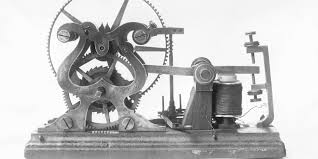
The telegraph operates on a basic principle of electromagnetism. When a sender presses down on a "key," they complete an electrical circuit, allowing current to flow to a receiver at the other end. In the early days, the receiver was often a device that made physical marks on a moving strip of paper. However, operators soon realized they could decode the messages simply by listening to the rhythmic clicking of the receiving electromagnet. This shift from visual to auditory decoding made the process significantly faster and more efficient, turningtelegraphy into a specialized trade requiring immense concentration and a finely tuned ear.
The Logic and Structure of Morse Code
To turn simple electrical pulses into language, Samuel Morse developed a binary system of dots and dashes. A "dot" (or dit) is a short pulse, while a "dash" (or dah) is three times as long. The beauty of the system lies in its efficiency; Morse studied the frequency of letters in the English language and assigned the shortest codes to the most common letters. For example, the letter "E" is represented by a single dot. This logic allowed telegraph operators to transmit complex information with remarkable speed, averaging 20 to 30 words per minute. Operators had to masterFundamental Morse Code to ensure accuracy during high-pressure transmissions.
Continuously optimize your network
Impact on Global Infrastructure
The telegraph did more than just send messages; it shrunk the world. For the first time, news from a battlefield or a stock market update from a distant city could be received in real-time. This led to the rapid expansion of telegraph lines across North America and eventually the laying of transatlantic cables that connected continents. Governments and military leaders gained unprecedented control over their operations, and the "Telegraph Age" effectively served as a precursor to the modern electronic age, establishing the physical networks that would eventually evolve into telephone lines and fiber-optic networks.
Modern Applications of Morse Code
While the telegraph has been relegated to museums, Morse code remains a vital skill in specific circles. It is still widely utilized byamateur radio enthusiasts (Ham radio) as a reliable way to communicate over weak signals where voice transmission might fail. Additionally, Morse code remains an essential emergency tool in aviation and maritime environments, as it can be transmitted via light (flashlights or signal mirrors) if electrical communication systems are compromised. It also serves as a criticalaccessibility tool for individuals with severe physical disabilities, allowing them to communicate via specialized switches or eye blinks.
Educational Resources and Learning Materials
Samuel Morse Papers at the Library of Congress: An extensive archive of original letters, sketches, and documents detailing the development of the telegraph and the struggles Morse faced during its inception.
The International Morse Code Chart: The official ITU recommendation defining the specific characters and timing used in international Morse code today.
History of the Atlantic Cable & Undersea Communications: A deep dive into the technical and logistical challenges of connecting the world via underwater telegraphy, featuring maps and historical photos.
Morse Code Myths and Facts from ARRL: A resource from the American Radio Relay League about the history and current usage of code in modern amateur radio communication.
The Telegrapher's Craft: A historical overview focused on the social and economic impact of telegraphy, including what it was like to work as a professional operator.
Western Union: Our History: The official corporate history of the company that once dominated the global telegraph industry and transitioned into financial services.
Morse Code for Adaptive Communication: A resource detailing how Morse code is adapted for use by people with severe speech or physical impairments to facilitate digital interaction.
Naval History and Heritage Command: Visual Signaling: A guide to the history of maritime signaling, including the specific use of Morse code with high-powered signal lamps on warships.
Morse Code in Classical Music: An interesting look at how the rhythms of dots and dashes have been used by composers to hide messages in musical scores.
The Invention of the Telephone vs. the Telegraph: A technical comparison of how the two technologies overlapped and eventually diverged during the late 19th century.
The Titanic and the SOS Signal: The Royal Museums Greenwich explains the origins of the most famous Morse code distress signal and its role in maritime history.
Federal Communications Commission (FCC) History: A regulatory timeline of how the telegraph was managed by the U.S. government throughout its commercial life.
U.S. Diplomacy and the Telegraph, 1866: Article from the U.S. Department of State’s Office of the Historian explores how the telegraph revolutionized the journalism industry and forever changed international diplomacy.
Telegraphy in the American Civil War: Information from an academic paper about how the "Lightning Party" influenced military strategy and presidential communication.
Fundamental Morse Code and Telegraphy: Hosted by the University at Buffalo, this technical resource offers a comprehensive overview of the fundamental principles of Morse code, including character timing, spacing rules, and the physics of wire-based signal transmission.
Featured Articles
Want to learn more about how Lightyear can help you?
Let us show you the product and discuss specifics on how it might be helpful.
Stay up to date on our product, straight to your inbox every month.